If you're tired of power washing and staining a wood deck every couple of years, composite is usually the first thing people ask about. It doesn't need sealing, it won't splinter, and it holds its color better than bare wood in strong sun. It also costs more up front, and it's less forgiving of sloppy framing than most people realize.
Why composite fits Statesville weather
Our summers are hot and humid, the afternoon sun is strong, and heavy rain comes often. Every spring, pine pollen settles into every gap. Wood decks handle all of this with regular cleaning and sealing. Composite handles it with a rinse and an occasional scrub.
Composite boards, from brands like Trex or TimberTech and others, are made from wood fibers and plastic, usually with a protective outer shell called a cap. Capped boards resist staining and fading much better than older uncapped products. During the visit, talk through brands, colors, board lines and how warm each one gets in full afternoon sun. What matters more than the brand is installing it the way the manufacturer's instructions call for, on a frame built for it. That's where most composite problems actually start: not with the boards, but with the framing and fastening underneath.
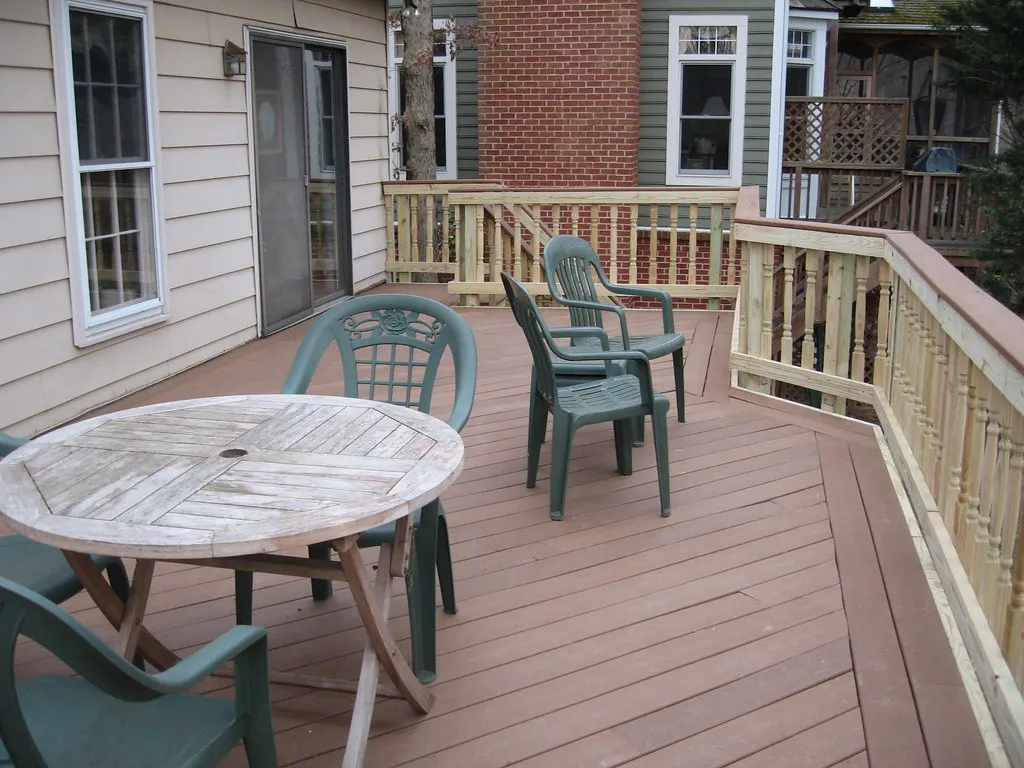
What composite needs from the frame
Composite is heavier and more flexible than pressure-treated decking. That means the framing underneath matters even more.
Joist spacing
Most composite decking calls for joists at 16 inches on center, and tighter, often 12 inches, when boards run on an angle. Wood decks were often framed at 24 inches. Putting composite on a frame built for wood leads to bouncy, sagging boards.
A flat frame
Composite shows every high and low spot in the framing. A good installer checks and planes joists so the surface reads flat, and uses joist tape on top of the framing to help shed water.
Gapping and expansion
Composite expands and contracts with temperature. The manufacturer spells out end gaps and side gaps based on install temperature. Ignore them and you get buckling in July or wide gaps in January.
Fasteners and ventilation
Most composite boards install with hidden clips or specific screws. They also need airflow underneath. A low deck boxed in tight to the ground can trap heat and moisture.
Can you put composite on my existing deck?
Sometimes. If your existing frame is sound, at the right spacing, and the ledger and footings are in good shape, a resurface is possible. Often, though, the frame was built for wood at 24-inch spacing or has rot in places you can't see from the top. The builder should pull a few boards, check the ledger, joists and posts, and tell you honestly whether it's worth reusing. If it isn't, see the deck repair and rebuild page.
Composite vs. pressure-treated
Here's the plain version:
- Up front cost: composite is higher. The boards cost more and the framing is usually tighter, so the same deck costs more than one built with pressure-treated decking.
- Upkeep: composite needs cleaning, not staining or sealing.
- Heat: dark composite gets hot in full sun. Lighter colors help on a west-facing deck.
- Look: composite comes in many colors and grain patterns, and it stays consistent.
- Repairs: a damaged board can usually be swapped, but colors from different years may not match perfectly.
Neither choice is wrong. It comes down to budget, how long you plan to stay, and how much upkeep you want. Our deck building cost guide has more on how the numbers compare.
What a good installer won't do
A good installer won't lay composite over a frame they haven't checked. They won't skip the gapping or ventilation the manufacturer calls for to make the job go faster. And they won't sell you composite railings or stairs you don't need. You can mix composite decking with other railing systems if that fits better.
Questions people ask
How long does composite decking last?
Capped composite boards are designed to last for decades with basic cleaning. In practice, the frame underneath usually determines how long the deck lasts, which is why footings, flashing, joist spacing and fasteners deserve so much attention.
Does composite decking get hot in the sun?
Yes, especially darker colors in full afternoon sun. Lighter colors and some newer heat-reducing products help. If your deck faces south or west, talk through color choices and shade options before you commit.
How do I clean a composite deck?
Rinse it regularly, especially after pine pollen season, and use a soft brush with soap or a cleaner the manufacturer approves for tougher spots. Keep the gaps between boards clear so water drains. Avoid high-pressure washing unless the manufacturer says it's fine.
Is composite worth the extra cost?
For many homeowners, yes, because they skip years of staining and sealing. If you plan to sell soon or are on a tight budget, pressure-treated may make more sense. Ask for quotes on both so you can compare real numbers for your deck.