A pergola is the simplest way to give a deck or patio some shape. It frames the space, breaks up the afternoon sun and gives you a place to hang lights. It won't keep you dry in a storm. If you need rain cover, that's a roofed structure, and we cover those on the covered decks and patio covers page.
What a pergola does well is filtered shade with an open sky feel. On a south or west-facing deck in Statesville, that can be the difference between sitting outside at 5 p.m. and waiting until dark.
What a pergola is (and what it isn't)
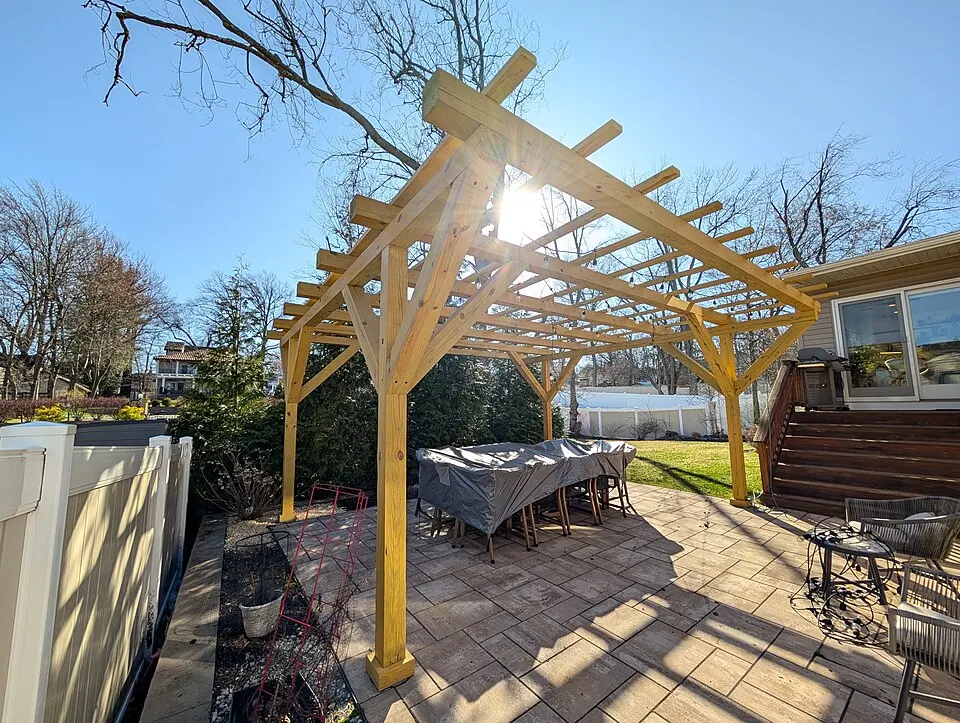
Most pergolas share the same parts:
- Posts that carry everything down to footings
- Beams that run across the tops of the posts
- Rafters that sit on the beams and set the shade pattern
- Purlins or slats on top of the rafters, if you want denser shade
Shade depends on rafter spacing and direction. Tighter spacing means more shade and a heavier look. A good builder looks at where the sun crosses your yard before settling on a layout.
Wood, aluminum or vinyl
Pressure-treated pine is the most common pergola material around Statesville, for the same reason it's the most common deck material. It's affordable, strong and easy to work with. It also moves. Big pine beams can twist and check as they dry out over the first summer, and they need cleaning and stain or paint every few years.
Cedar costs more and is lighter, with a warm color and less tendency to twist. It still needs a finish if you want to keep the color from going gray.
Aluminum pergolas come as engineered systems with powder-coated finishes. They don't rot, don't need staining and hold their shape. They look cleaner and more modern, which suits some houses better than others. Many aluminum systems can take louvered roof panels that open and close.
Vinyl is usually sleeves over a structural core. Ask what's inside, because that's what carries the load.
If your house is an older farmhouse or a brick ranch out in the county, heavy wood beams with shaped rafter tails often look right at home. On a newer house in a subdivision near Troutman or Mooresville, aluminum can fit just as well.
Attached to the house or freestanding
An attached pergola uses the house as support on one side, usually with a ledger or beam fastened to the wall. That saves a row of posts. It also means a new connection to your house that has to be flashed so water doesn't get behind it, the same way a deck ledger does.
A freestanding pergola stands on its own four (or more) posts. It can go anywhere: over a hot tub, at the far end of a patio, or out in the yard over a fire pit. It needs more posts, and it relies on its footings and bracing to resist wind.
On a deck or on the ground
This is the part people underestimate.
On a patio or in the yard, each post needs a footing. Setting posts on top of an existing slab or pavers with surface brackets is a common shortcut, and it often leaves a pergola that rocks in the wind. The better approach is footings dug to proper depth through or beside the patio, with post bases that keep the wood off the concrete.
On a deck, the posts need a path for the load down to the ground. That usually means posts that run down past the decking to their own footings, or framing added under the deck to carry them. A post screwed to the top of the deck boards will wobble and can pull the boards loose. If you're building a new deck and want a pergola later, tell the builder now so footings go in at the right spots. Our custom decks page talks about planning ahead like this.
Details that separate a good pergola from a shaky one
- Bracing. Knee braces or rigid connections at the post tops keep the frame from racking side to side.
- Hardware. Fasteners and connectors rated for treated lumber, so they don't corrode in our humid summers.
- Post bases. Standoff bases that keep post ends dry. A post sitting in a puddle is where rot starts.
- Weight on top. Wisteria and other heavy vines put real load on a pergola over time. Lightweight shade cloth or a retractable canopy is easier on the frame.
Permits and planning
Whether a pergola needs a permit depends on its size and how it attaches. The contractor checks and pulls the permit when one is required. Before footings are dug, NC811 is called so underground utilities get marked.
For a sense of what moves the price, size, material, height and footing count matter most. Our deck building cost guide explains how a written quote should break those out.
What to ask before you sign
- Where will the posts land, and what's under each one?
- Will the pergola attach to the house, and how will that connection be flashed?
- Which way will the rafters run, and how much shade will that give me in the afternoon?
- What finish is included, and when does it get applied?
The builder who serves Statesville also covers Harmony, Stony Point and the rest of the area around town. A free on-site visit and a written estimate come before anything gets built.
Questions people ask
How much shade does a pergola actually give?
Less than a solid roof, and more than people expect when the rafters are spaced and aimed well. The shade shifts through the day as the sun moves. If you want more, tighter slats, shade cloth or a retractable canopy can be added.
Can a pergola be added to my existing deck?
Often, yes, but the posts need proper support. The builder checks the deck framing and figures out whether posts can run down to new footings or need extra framing underneath. Bolting posts to the top of the decking is not enough.
Is aluminum or wood better for a pergola?
Wood costs less up front and suits traditional houses, but it needs stain or paint and can twist as it dries. Aluminum costs more and needs very little upkeep. Ask for both to be priced at your estimate.
Will a pergola keep the rain off?
Not an open one. Rain falls straight through. If you want to stay dry, look at a louvered aluminum system that closes, clear roof panels on top, or a solid covered deck instead.